⚠️ This page is archived.
It is kept only for reference, research, or recordkeeping purposes. This content was created before April 24, 2026, and is no longer being updated. As an archived resource, it may not meet current accessibility standards.
Need this in a different format? If you require this content in an accessible format for your use, please email: [bone@ohio.edu]. We will remediate the requested material promptly.
Our Work
The Athens Remote Working Economic Development Opportunity
In May 2021, staff of the Ohio University Voinovich School of Leadership and Public Service undertook an applied research project to provide information on remote working support and attraction factors, as well as potential economic benefit, to guide ongoing discussions and future decisions by Athens County and City public policy leadership. The research was directed by Brent Lane, Executive in Residence with the Voinovich School of Leadership and Public Service, with the support of other Ohio University scholars, staff, and students. The project was completed in July 2021.
Economic Strategy Logan County
Presentation created with the Logan County Chamber of Commerce(opens in a new window) and Bowling Green State University partners in the Voinovich School’s EDA University Center, to help the county develop an economic development plan.
Strategic Plan Noble County
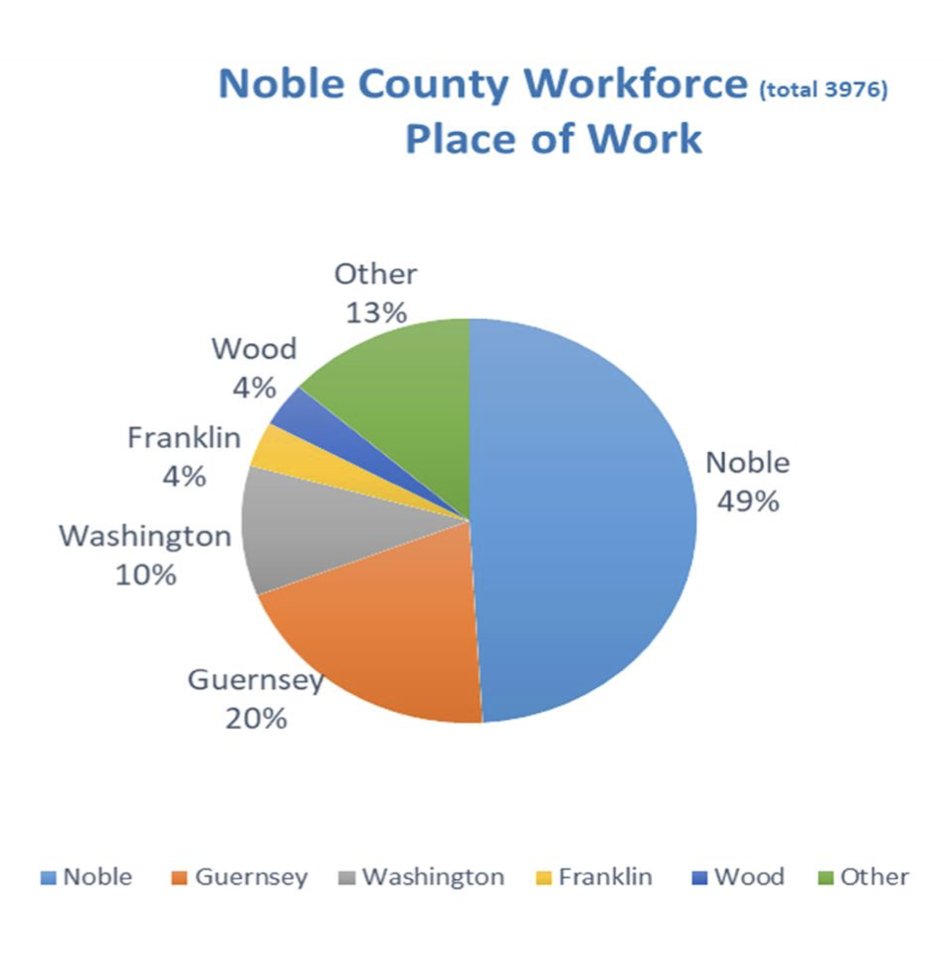
This report represents a student-led and faculty/staff supported effort to assist Noble County in identifying economic and community development opportunities. The recommendations found in the Executive Summary and expanded upon in ‘6. Priorities’ provide a framework of both short- term and long-term steps, for Noble County to pursue as part of the county’s economic development agenda. Our hope is that this study and the accompanying public meetings act as a starting point for the community to continue conversations about Noble County’s future economic development.
Economic Development Adams County
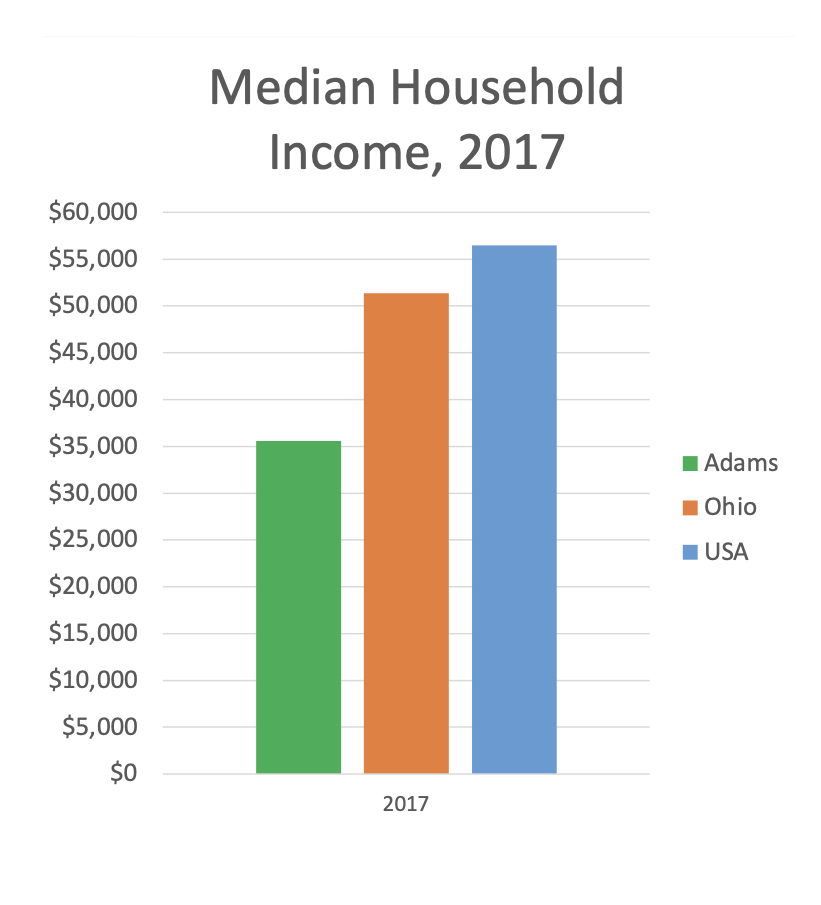
Assisting Adams County to mitigate the economic effects of the impending closure of the Dayton Power and Light (DP&L) Stuart and Killen coal-fired power plants is the perfect opportunity for the Ohio University’s Voinovich School to put a new EDA grant to work.
Awarded in late 2016, the new Ohio University Appalachian Ohio Skillshed Analysis grant provides combined funding from the U.S. Economic Development Administration (EDA) and Ohio University’s Appalachian New Economy Partnership to identify emerging occupations in the Appalachian region and assess the skills gap from declining industries, specifically coal.
Appalachian Ohio Skillshed Analysis
Principal Investigator: G. Jason Jolley, Ph.D.
Funder: U.S. Economic Development Administration
Description: The Voinovich School improved an existing workforce analysis approach and developed an innovative method to match the occupational skills gap, wage gap, and educational training needs of displaced workers to emerging occupational opportunities. This skillshed analysis was applied to four areas in Appalachian Ohio where workers were displaced or scheduled to be displaced due the closure of a coal mine and/or coal-fired power plant. This project included modeling the economic, fiscal, and workforce impacts of the DP&L closures in Adams County, Ohio.
BOBCAT Network
Principal Investigator: G. Jason Jolley, Ph.D.
Funder: U.S. Economic Development Administration
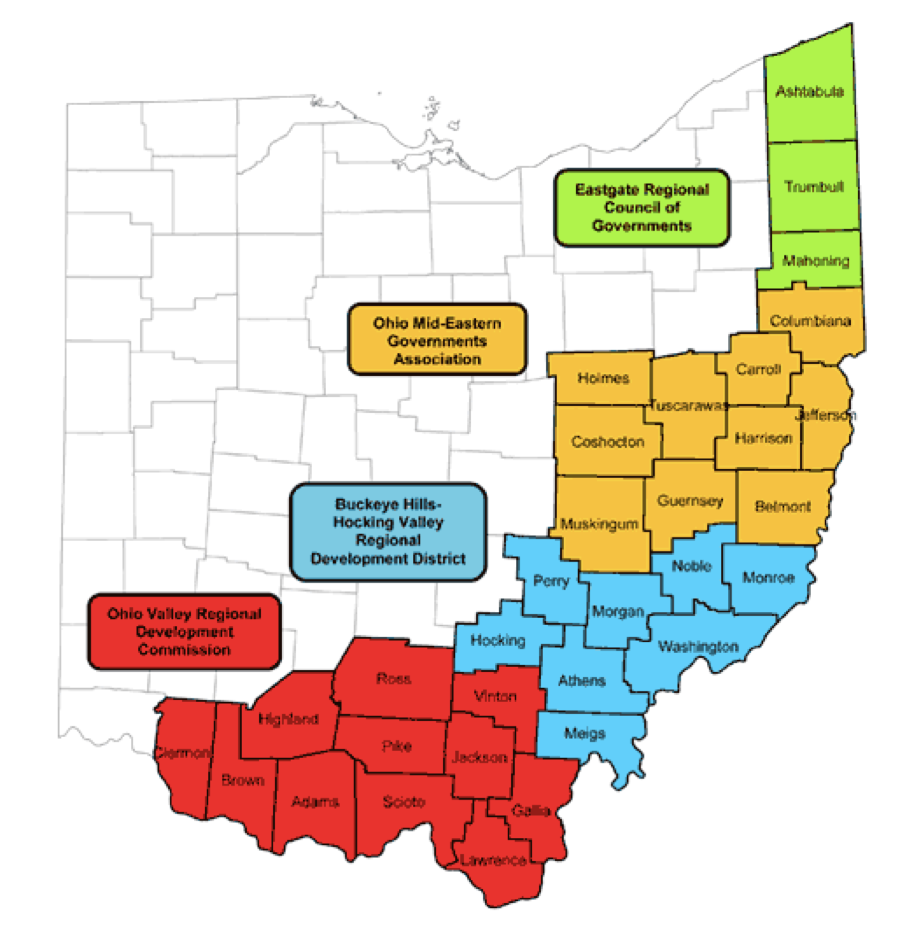
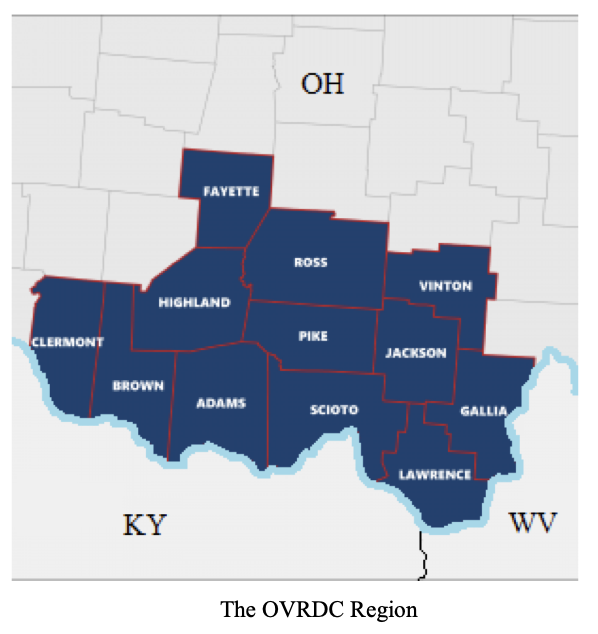
Description: In partnership with the Ohio Valley Regional Development Commission (OVRDC), Ohio University’s Voinovich School is assisting the 12-county OVRDC region with
economic recovery efforts around the closure of two Dayton Power & Light (DP&L) coal-fired power plants in Adams County, brownfields recovery in Scioto County, coal supply chain and workforce analysis in Lawrence County, and regionwide efforts to support workforce, economic, and community development.
Displaced Coal Fired Power Plant Skillshed Analysis
This initial webinar of a two-part series discusses the economic, fiscal, and workforce impacts of two Dayton Power & Light (DP&L) coal-fired power plant closures in Adams County, Ohio. The research team conducted an economic impact analysis using IMPLAN modeling software to quantify the effects of job losses in the region, combining direct, indirect, and induced effects to calculate the total.
The EIA revealed that for every job lost at the DP&L plants, an additional two jobs will be lost in the regional economy. The examination of fiscal impacts suggests that Adams County could lose $8.5 million in tax revenue, a tax base loss which will have a detrimental influence on local government budgets, especially local school systems.
Lastly, researchers assessed workforce impacts by reviewing the coal-fired power plant occupations and necessary skills associated with these positions, then mapping those skills to emerging occupations in the region. Using O*NET Data, Occupational Transition maps were created to offer employment options categorized by the ease of job transition and potential wage increase/decrease. Ultimately, the study found that transitions to new employment opportunities will require retraining and most emerging occupations pay less than the lost DP&L jobs.